The U-Bahn lines U1, U2 and U4 stop at Karlsplatz, right next to the TU Wien main building. Open the route from where you are, straight to the Kuppelsaal:
TU Wien, Karlsplatz 13, 1040 Vienna — the main entrance facing Karlsplatz, on the ground floor.
3
Check in right at the entrance
Registration is right by the entrance: show your ticket and leave your coat at the cloakroom next to it. Any question? Just ask the team at registration.
4
Take the lift to the top floor
The Kuppelsaal is on the very top floor, right under the dome — take the lift all the way up. The exhibition is on the 1st floor if you want to stop on the way.
Notes
Your notes
Ideas, contacts, things to look up later. Notes on a talk can be added from its card.
Your notes and stars are saved only on this phone — nothing is sent to us or anyone else.
Tip: add this page to your home screen; it keeps working even if the Wi-Fi drops.
Our partners
The City of Vienna faces major challenges in the coming years. The transition to a
climate-neutral future requires skilled professionals – and for us, especially women in
technical fields. We want to encourage more women to pursue careers at Wiener Stadtwerke
and invite them to join us in shaping the climate-neutral city of tomorrow. From green
hydrogen to the circular economy, we combine practical experience with research to drive
the climate transition forward. Together with TEDxTU Wien, we give experts a platform to
share their insights and inspire forward-thinking ideas.
Peter Weinelt, CEO of Wiener Stadtwerke
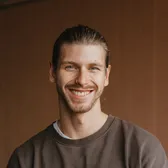
Nico Lind
Co-Founder of Benno and Possibly
Why teenagers deserve the right to be wrong
About the talk
After working with more than 10,000 students in Austrian classrooms, one pattern stands out: at 14, we ask young people to make one of the biggest decisions of their lives. But they make it in a school system that, since 1774, has taught them that every question has exactly one right answer. That works for maths and physics. It doesn’t work for career choice, where most of us never find out whether a decision was “right” or “wrong,” and where careers rarely follow a straight line anymore. This talk argues that teenagers deserve the right to be wrong: the freedom to experiment, to try things out in the real world, and to say out loud, “I honestly don’t know what I want yet, and that’s okay.” It’s a mindset, which would not only benefit career changers, but everyone else too.
About Nico
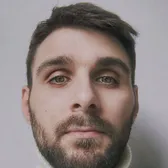
Nico Lind is a Viennese founder working on one question: how do young people find a career that actually fits them? He co-founded two EdTech start-ups, Benno and Possibly, which help 13- to 18-year-olds make career decisions based on their strengths and interests. Over the past four years, he and his team have run more than 500 workshops in Viennese schools and worked with over 10,000 students. They also help students get out of the classroom through taster days, short internships and company visits. Nico holds an MBA in International Talent Management and Leadership. Alongside his start-ups, he works as a certified digitalisation consultant for small and medium-sized businesses. Yet he is still curiously figuring out his own path, and believes that’s exactly the point of life.
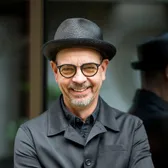
We tend to treat clarity as something we possess – and communication as the act of transferring it into someone else’s head; yet if the other person understands something different, can we really call our message clear? Drawing on the image of a tightrope walker, who stays on course not by holding a perfect position but by constantly correcting it, the talk shows that balance is not a fixed point but the ability to adjust without losing direction. The same is true when we talk to each other: real listening means allowing what we hear to change our own position, moving consciously between standpoint and expectations, I and we, closeness and distance, sending and receiving – because clarity does not live in one person’s head but emerges between people, and the key skill is not holding our position but knowing when to move.
About Burkhard
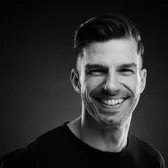
Burkhard Hanke is an author, keynote speaker, leadership trainer and executive coach with more than three decades of experience in consulting, management and leadership. Trained as a theologian with a focus on business ethics, he co-founded the German Business Ethics Network (DNWE) in 1993 and began his career in management consulting. He went on to hold senior roles at CSC and zeb, where he led recruiting and employer branding across 13 European countries and later served as Chief CSR Officer. Having conducted thousands of job interviews, he knows how often people talk past each other – even when both believe they are being perfectly clear. His books “KNALLHART empathisch. Führen mit Herz und Hirn” (2025) and “KNALLHART klar. Wie Führung durch klare Kommunikation gelingt” (forthcoming Oct 2026), published by Goldegg Verlag in Vienna, explore leadership, empathy and clear communication. Today he works with leaders and organizations as a speaker, coach and trainer.
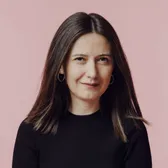
Semiconductor Strategy & Technology Expert · Host of Chips Weekly
The Chip War Is Not Really About Chips
About the talk
We hear a lot about the “chip war,” but it is not really just about chips. The bigger story is about who controls the technology and infrastructure behind AI — the factories, machines, memory, energy and supply chains that make advanced computing possible. The talk looks at why no country can build all of this alone, why some technologies are so difficult to replace, and what this means for the future of AI and technological independence.
About Diana
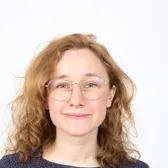
Diana Khlan is a semiconductor industry professional, technology strategist and creator of Chips Weekly, where she explains the technologies and strategic shifts shaping the global chip industry and AI infrastructure. She has worked at Infineon Technologies for more than 10 years, with experience spanning semiconductor manufacturing, quality, product development and technology strategy. Diana holds an MSc from TU Wien and an MBA in Deep Tech. She regularly speaks about semiconductors, AI hardware, technological sovereignty and the global semiconductor ecosystem, with a focus on making complex technology understandable to a broader audience.
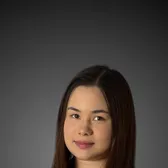
“What do you want to be when you grow up?” In a world where AI can do almost anything and change is unpredictable, this question might be a trap for children. But what if the very things we urge them to avoid turn out to be the keys to their survival in that future?
About Lilicia
Lilicia enrolled in university at the age of 14 while still attending high school. Today, at 18, she is a programmer, startup founder, content creator, musician, and martial artist, and is set to graduate with a bachelor’s degree in Business Informatics this term. She chose to accelerate her education specifically to buy herself enough time for “failure.” Through hands-on experience, experimentation, and trial and error, she is now dedicated to developing learning tools and spaces that promote AI literacy for everyone — preparing the next generation to keep pace with an algorithm-driven world.
The Chemistry of Terrible Decisions: Building Our World or Burning It?
About the talk
Modern society is trapped in a dangerous geopolitical reliance on petrochemicals, running from the consequences of our own resource dependency. We started this race believing oil was just a tool for progress, but today, true independence requires a radical shift. By using novel catalysts, we can “wake up” plant-based molecules like glucose to sustainably manufacture the materials we need. Of course, a single chemical process won’t magically fix the whole world. Rather, it is proof that humanity is fighting back, and that solutions are hidden all around us. We just need to make the right choice.
About Pasquale
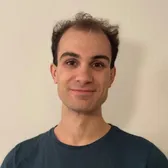
Pasquale Alex Chiaramonte is a PhD researcher at the Institute of Chemical, Environmental and Bioscience Engineering at TU Wien, Austria. Working within the Research Group for Sustainable Use of Natural Resources, his research focuses on the development and mechanistic study of novel catalysts for the isomerization of glucose into fructose. Pasquale holds a Master’s degree in Chemistry for Environment and Health from the University of Calabria. His scientific background spans international research experiences, including the development of fluorimetric sensors for molecular diagnostics at the University of Coimbra, and the synthesis of highly sensitive nanoMIP-based sensors for his Master’s thesis at the University of Vienna. Driven by the principles of green chemistry, Pasquale aims to design sustainable chemical processes that can turn plant-based molecules into viable alternatives to petroleum.
Back to Earth: Why the Building Material of the Past Could Have a Future
About the talk
What if one of our oldest building materials could help solve some of today’s construction challenges? By combining modern material science with locally available earth and mineral waste streams, we can rethink how we build with less processing, less waste and fewer imported resources. The same principle, building with what is already there, may become even more important in the future.
About Toni
Toni Bakovic is a chemist and researcher at TU Wien working at the intersection of chemistry, materials science and construction. After working in the cement and concrete industry on lower-CO₂ binders, he returned to TU Wien to pursue a PhD and explore how the environmental impact of building materials could be reduced even further. His research turned to earth, a widely available material that requires far less processing than conventional cement-based systems. Together with project partners, he develops flowable, cement-free earth mixtures using natural raw materials as well as mineral waste sludges and excavated earth that might otherwise be discarded. More broadly, Toni is interested in what happens when ideas and methods from different fields are connected and how looking back at simple materials can help us rethink how we build in the future.
A story can look completely different depending on where you stand in time: someone disappears, someone returns, two lives briefly intersect, and an event that seemed small suddenly becomes central. This talk explores how we can turn these tangled timelines into visual maps, and how drawing a story can reveal structure, patterns, and connections that are easy to miss when we experience it only as a sequence of events. More broadly, it shows how visualization can become a tool for thinking about time, relationships, and complexity.
About Sara
Sara Di Bartolomeo is a data visualization researcher who studies how we can turn complex information into pictures that help us think. Her work focuses on networks, relationships, and stories: how to draw them, how to make their structure visible, and how the way we represent information can change what we notice and understand. She is currently a researcher and principal investigator at TU Wien. She received her PhD in Computer Science from Northeastern University, and her work in data visualization has received several international awards.
Master’s student, TU Wien · Machine learning engineer
Generation Hope: How to join Gen H
About the talk
The rising amount of crisis in the world often makes people feel paralyzed by hopelessness. Leon shares a practice he observed in people who feel hopeful: developing the habit of solving global problems in our own life, in our own version.
About Leon
Leon Orou is a Master’s student at TU Wien in Computational Science and Engineering. He completed his Bachelor in Artificial Intelligence at the JKU in Linz and has worked as a self-employed machine learning engineer. His work in AI raised the question of how we can become more hopeful for the future. To answer it, he travelled around Asia for five months, asking everyone: “What makes you look brightly into the future?” He collected the written answers in a book, which grew into a lasting interest in what makes people hopeful.
How to build a new working world for the heroines who don’t need a hero
About the talk
This talk is about gender inequality in the workplace and the invisible work of women. It moves beyond familiar issues such as pay gaps and glass ceilings and explores how to overcome the beliefs that women are taught from a very young age. It calls for a stronger “girls club” of networks and communities for women, better measurement of invisible work and a more sustainable approach to equality that turns awareness into action. If inequality is partly learned and reinforced through the systems around us, then we can also redesign those systems.
About Erika
Erika Obermayr grew up in rural Upper Austria and has lived in Vienna for the last decade, building her life around business in different environments and cultures. After studying management at WU Vienna and moving through the worlds of consulting and start-ups, she turned to a question that had always fascinated her: how the stories we tell ourselves shape the way we work, relate to others and define success. Today, as a young researcher at TU Wien, she explores the intersection of accounting, sustainability and society. She asks what the “S” in E-S-G can mean beyond reporting, how we can make invisible work visible and what sustainable workplaces could look like.
Fear can take hold of us and stop us from moving forward, especially when we face the unknown or feel that we are losing control. By understanding what is within our control, knowing what to expect, and consciously observing our reactions in stressful situations, we can change the way we experience fear. Starting with the dental chair, this talk explores how these principles can help us face fear and uncertainty in many other areas of life.
About Nikolaus
Nikolaus Eder is an oral and maxillofacial surgeon operating at the interface of medicine and dentistry, having completed both his medical and dental studies in Vienna. His work spans the full breadth of clinical and surgical patient care, including communicating complex treatment decisions to patients from diverse backgrounds. He broadened his clinical training in Australia, Oman, and Germany, working across different healthcare systems and cultural environments, and gained a profound understanding of how cultural backgrounds can shape the way patients experience illness, treatment, and recovery.
The Hidden Signs of Resilience: What Forests Teach Us About Mental Strength
About the talk
This talk explores the different dimensions of forest resilience and connects them to a very different complex system: the human mind. From the way systems respond to disturbance to the subtle warning signs that appear before they reach a breaking point, forests may offer unexpected insights into how we understand and strengthen resilience in our own lives.
About Jakob
After completing his degree in Environmental Engineering, Jakob Everke works in the research group for Climate and Environmental Remote Sensing at TU Wien. His research uses satellite observations to study how forests respond to wildfires and how ecosystems recover afterwards. He is particularly interested in how resilience differs between ecosystems and how changes in resilience can be detected before a disturbance occurs. Beyond his research, he is passionate about communicating science and making complex ideas accessible to a wider audience.
Carbon dioxide is usually where the story ends — but could it become the starting point for something useful, without pretending we can recycle our way out of climate change? The talk explores how sunlight and renewable electricity can transform CO₂ into chemical building blocks, and why the most important questions may lie outside the reactor: where the carbon comes from, what powers the process, and who needs the resulting product. Rather than promising a black box that cancels emissions, it invites us to imagine carefully designed local connections between carbon sources, clean energy, and chemical production.
About Dogukan
Dogukan H. Apaydin is an assistant professor at TU Wien working at the intersection of materials chemistry and electrochemistry. He explores how sunlight and renewable electricity can turn carbon dioxide into useful chemical building blocks and enable green hydrogen production. His research connects the development of materials and devices with a broader question: how can renewable energy support sustainable chemical production? Beyond what happens inside a reactor, he is interested in the systems around it: where resources come from, how energy is supplied, and whether a technology delivers a meaningful environmental benefit.
Host · Communications & social-impact professional
About Emanuela
Emanuela Zaimi is a communications and social-impact professional, nonprofit founder & leader, and passionate advocate for inclusion. With a career spanning communications, project management, advocacy, and international cooperation, Emanuela believes strongly in the power of ideas and in the stories that bring those ideas to life. A TEDx speaker herself, she first stepped onto a TEDx stage in 2013. More than a decade later, she returns to the TEDx world in a different role: as one of the hosts of TEDxTUWien 2026. She is also part of our volunteer organizing team for this edition.
Laurin Atil-Akantisz is a seasoned consultant and project manager dedicated to creating innovative and sustainable solutions in architecture and real estate. Outside his professional work, Laurin’s passion lies in creating spaces for dialogue, curiosity, and shared growth. As an experienced moderator and facilitator, he has hosted panel discussions, startup gatherings, corporate quiz events, and countless workshops that bring people together around ideas that matter. With his background as a scout leader and his years of experience leading teams, Laurin combines structure with warmth, intellect with playfulness. On stage, he connects audiences and speakers with authenticity and ease, ensuring every exchange feels human, engaging, and meaningful.
What happens when we stop running from our emotions and begin to listen to what they have to tell us? Through three intimate, stripped-back acoustic performances, Vienna-based singer-songwriter SARENNE explores the inner landscapes of the human experience. Blending reflective storytelling with soulful melodies and deeply personal lyrics, her music invites audiences to look beyond the surface of everyday life and reconnect with the parts of themselves that often go unheard. At its heart, this performance is an exploration of emotional alchemy: the possibility of turning pain into understanding, uncertainty into curiosity, and the things we feel most deeply into something that connects us all.
About SARENNE
SARENNE is a Vienna-based singer-songwriter whose music lives at the intersection of vulnerability, introspection, and transformation. Rooted in acoustic singer-songwriter pop, her songs explore the patterns we inherit and the emotions we struggle to name. For SARENNE, songwriting is a form of emotional alchemy: a way of turning inner experiences into something tangible and meaningful. With honest lyrics, intimate melodies, and a gentle but powerful voice, she invites listeners to look beneath the surface and find connection in the things we often keep to ourselves.
Piano lecture (in German) · Keynote speaker, pianist & author
Auf der Tonleiter zum Erfolg — Chancen sehen, Gestaltungskraft nutzen
About the performance
We live in a world full of crises, uncertainty and change, and too often we focus on difficulties, risks and bad news. In doing so we lose not only our confidence and joy of life but also something decisive: our power to shape things. But opportunities are always there, says Martin Klapheck. What matters is whether we recognise them and have the courage to use them. In his extraordinary piano lecture he combines inspiring thoughts with live music and shows, entertainingly and impressively, how positive thinking sharpens our eye for opportunities, releases creativity and opens up new room to act. His message: we are not helplessly at the mercy of circumstances. We can set the beat for our own future.
About Martin
Martin Klapheck is a keynote speaker, pianist, entrepreneur and author of the book “Lebe deinen Beat”. With his unique piano lecture he combines the power of music with inspiring messages and inspires people to think positively, be creative and embrace personal change. He has been voted among the 100 best speakers in Germany several times, was named one of the “wichtigsten Köpfe der Erfolgswelt” by ERFOLG Magazin and is counted among the top 100 success coaches in the German-speaking region. His trademark: no PowerPoint battle, but real experiences that move, inspire and stay in memory.